
Equal-i Technology
Equal-i Technology
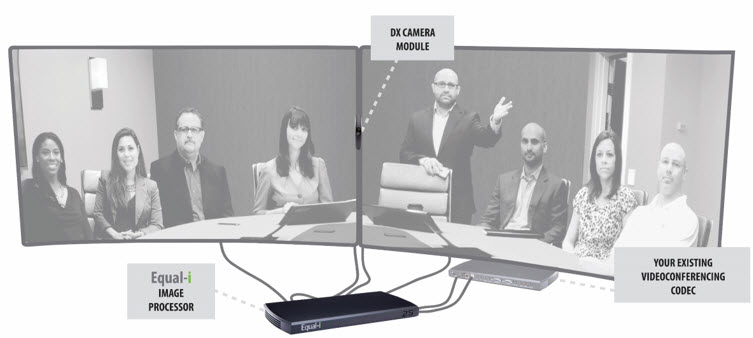
Equal-i is the name of Array Telepresence’s patented image improvement algorithms, camera and Image Processor that dramatically improves the scene for telepresence-quality experiences using your existing videoconferencing codec. The system works in regular-sized conference rooms with conventionally shaped conference tables but can be optimized with an oval or racetrack shape.
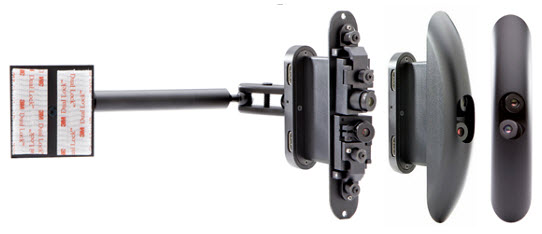
The Array DX Camera Module is concealed at perfect vertical eye-line between dual displays
For dual screen systems the Array Equal-i DX dual-headed camera is concealed at eye-level requiring just a 4mm separation between dual displays (curved or flat. Video walls are feasible as well) and then the camera sits on and is concealed by the display bezels.
 The Array Image Processor improves the scene and sits between the Array camera and the videoconferencing codec.
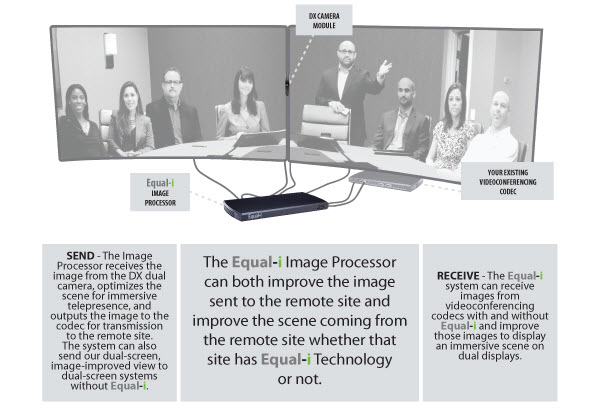
On the “transmit” side of the call, the Image Processor sits between the specially-designed camera and the videoconferencing codec. On the “receive” side, it sits between the codec and the displays, which allows it to both improve the scene that is being sent and the scene that is being received. The Image Processor is running Array’s custom image improvement and equalization algorithms on wire-speed FPGAs and geometric processors that dramatically improve the scene before sending it to the videoconferencing codec or displays - all with no discernible latency (less than 10ms).
Equal-i has Revolutionary Capabilities
Environmental Improvement - Visible cameras are psychologically unappealing to a significant percentage of the population so by concealing the camera Equal-i makes everyone more comfortable before the meeting even begins.
Eye-Line Improvement - Because the camera is concealed at perfect vertical eye-line in the center of the table, eye-contact is improved for every single position around the table. Because the system is designed to work with regular elongated conference tables it has better horizontal gaze angles than any 3-screen “split-table” telepresence system.
Image Improvement - The Image Processor significantly improves the scene before it is sent to the remote site making your executives and subject matter experts look better when conferencing:
- Furthest Participants Brought “Up Close and Personal” - Pixel count on the farthest face increased 6.5X over a pan-tilt-zoom camera.
- Equal-i-zation - The size of the farthest participant is equal-i-zed to the size of the closest participant.
Here is a video showing the difference between a Pan-Tilt-Zoom Camera and Array’s DX Camera Module and Image Processor.
Here is a short video highlighting the difference between Array’s DX Dual Camera and Image Processor vs. a Pan-Tilt-Zoom camera. Because of the way the video was composted and reduced in quality for YouTube, the video doesn’t show the true HD nature of the experience. Please contact Array to schedule a demonstration call with your videoconferencing system today and see it on the “Big Screens” in High Definition.
Typical Videoconferencing View Using a Pan-Tilt-Zoom Camera
Using Array’s Immersive Everywhere capability you can call dual-screen videoconferencing systems that don’t have Array and push out Array’s image-improved, dual-screen immersive telepresence scene making your executives and subject matter experts look better on video. Using Array’s Immersive PTZ capability you can, uniquely, improve the scene coming from conventional videoconferencing systems that do not yet have Equal-i and scale the incoming improved scene across dual displays improving things for your side as well.
The resultant experience is measurably superior to 3 screen “split-table” approach that costs $300,000 a room: Better eye-line, better horizontal gaze angle, stand up capture, more primary participants, smaller footprint, less bandwidth, no room remediation, and a better format for the local meeting than everyone facing in the same direction.
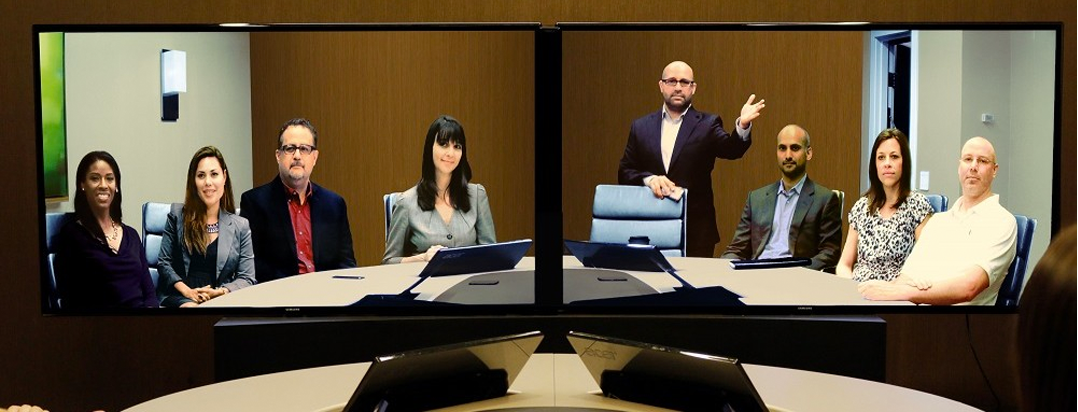
The same scene, same participants and same perspective using Array’s concealed DX Dual Camera and Image Processor
The farthest participants are brought “up close and personal” increasing the pixel count on their faces by 6.5Xs that of a PTZ camera while “Equal-i-zing” their size to the size of the closest participant. The camera is concealed at perfect vertical eye-line requiring just a 4mm separation between the displays.
Eye-line is improved by ~14% over PTZ to perfect vertical, meeting format is improved to a more “across the table” feel, stand-up capture is enabled, and the system powers a wide-format dual display using a single codec with no impact on bandwidth. The super-panoramic view of the remote scene brings in the eye’s peripheral vision which is one the brain’s chief immersion cues so participants become more immersed in the scene. The concealed camera makes everyone feel more at ease.
Immersive Everywhere - Using a videoconferencing codec with a 1080p data channel, a control system, and switcher Array makes it easy to call any dual screen videoconferencing system with a 1080p data channel and push out Array’s Image Improved dual-screen, life-size, immersive telepresence view even if the other side doesn’t yet have an Equal-i system. Your executives and subject matter experts look better when conferencing with partners, vendors, and clients and your partners will thank you for amazing them with the best visual collaboration experience they have ever seen!
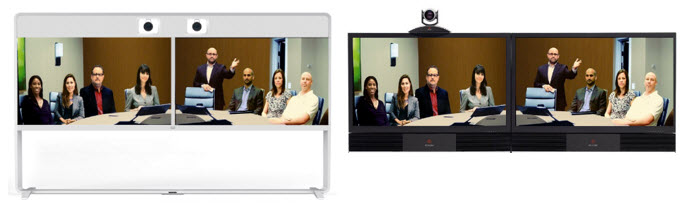 “Immersive Everywhere” allows you to push out Array’s image improved dual screen life-size immersive telepresence scene to any dual screen system with a 1080p data channel making your executives and subject matter experts look better on video. Your partners will like it as well because they can actually see who is talking! Switch back and forth between Dual Screen Immersive and “Video+Content” for a better data collaboration experience as well.
Video+Content - Array’s Proprietary Single Screen View
“What does Array look like from a regular single or dual screen videoconferencing system that doesn’t have Array?”
and
“How do you share data if you take up the 2nd screen for immersive telepresence?”
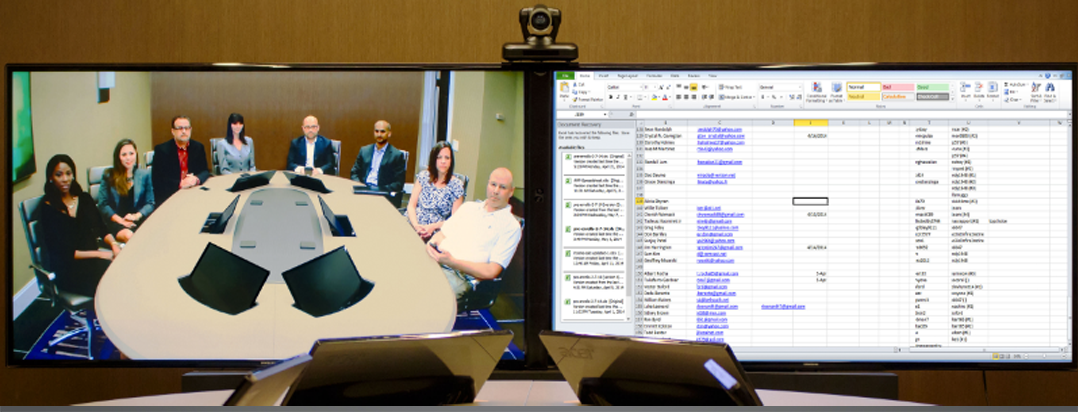
These are questions that we get. A lot. Introducing: “Video+Content” - Array’s proprietary single screen view that reduces the dual-screen, immersive telepresence view to a single screen and is way better than what you would get from a Pan-Tilt-Zoom camera especially when going through a video bridge or sending to people connecting from desktops, laptops, or mobile devices. Everyone is a lot more visible and you are capturing from perfect vertical eye-line with a better horizontal gaze angle for all participants. With dual-screen displays and Array’s “Immersive Everywhere” capability you can switch between dual screen immersive and “Video+Content” for a better data collaboration experience as well.
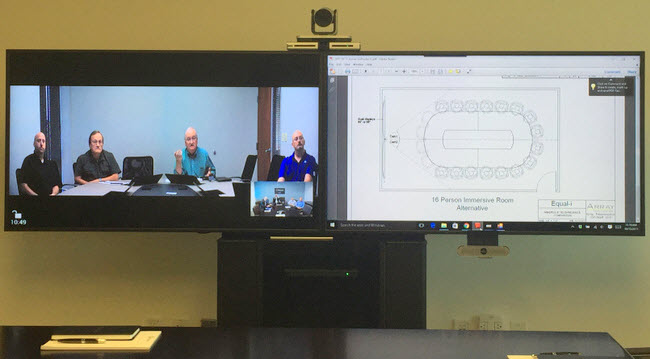 It’s easy to switch between dual-screen immersive telepresence and “Video+Content”, as Array scales nicely from 4-26+ seats. The screen on the left is showing 4 participants around a 12 person table that seats 8 for videoconferencing . The data screen on the right is showing a 16 person immersive telepresence room that seats 20 for non-videoconferencing meetings using the Equal-i DX Camera, 2S Image Processor and 90 inch displays.
Immersive PTZ - The industry’s only bi-direction image improvement. Because the Equal-i 2S Image Processor sits between the videoconferencing codec and the displays we have the ability to improve the incoming scene from a conventional videoconferencing system with a Pan-Tilt-Zoom camera trained on the center-line of the table even if that location doesn’t have an Equal-i System. We use our image improvement technology and scale the scene across dual displays. Voice tracking camera technology attempts to solve the problem of the most important people in the meeting always having “postage-stamp sized heads” by zooming in on the active speaker(s). It is a “one-way only” technology that only improves the scene that is sent. The technology frequently falls down, can “Over Zoom” and make remote participants GIANT, and loses everyone else in the room when zoomed. Voice tracking cameras don’t do anything about the psychologically-unappealing visible cameras or the imperfect eye-line, and they introduce moving, visible cameras and a constantly changing perspective to destroy any sense of immersion. Equal-i Technology is the industry’s only solution that improves both the scene you are sending and the scene you are receiving while hiding the technology and creating a more natural, immersive experience.
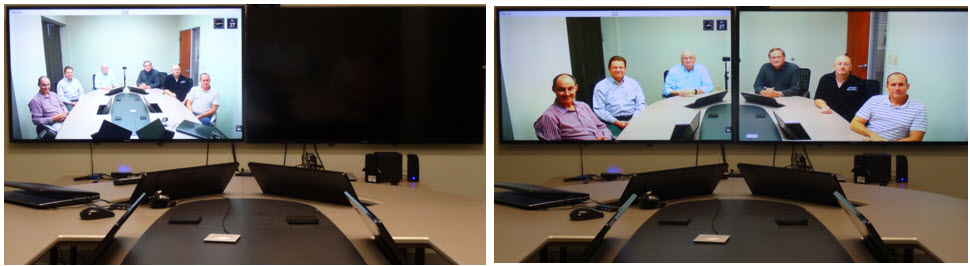 Immersive PTZ - The industry’s only bi-directional image improvement. Left: The incoming scene from a remote location that does not have Equal-i technology. Right: The same scene image improved and scaled across both displays creating a wide-format super-panoramic view of the remote scene. Using Array’s Immersive Everywhere capability you are sending the remote side an image improved, dual-screen immersive telepresence view simultaneously!
Easy-to-Control & Manage
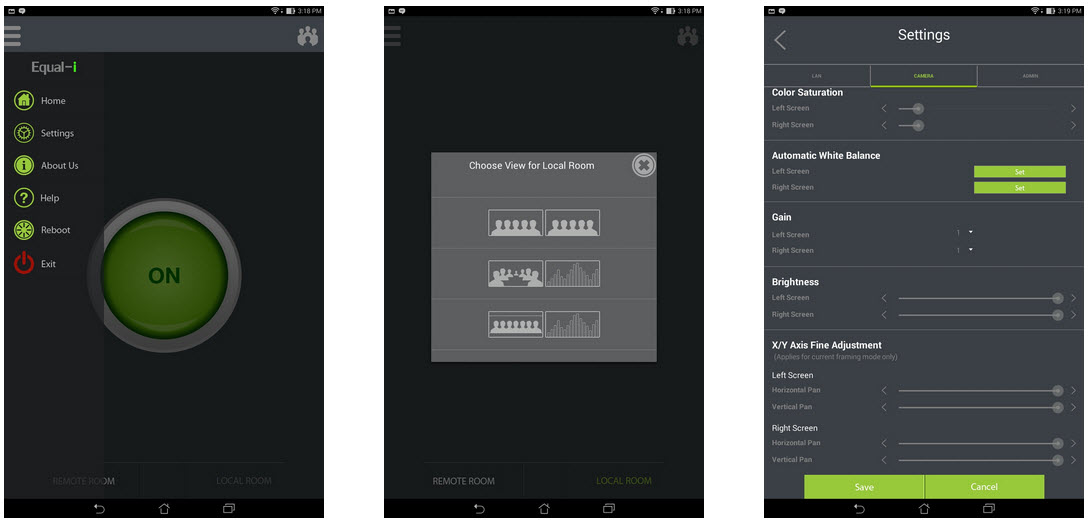
The Equal-i Control App: Far Left: On/Off Center: What Scene to Send Far Right: Installer Set Up
Equal-i is Easy! - There is one extra step, telling the Image Processor which scene to send: Dual-screen immersive telepresence or “Video & Content”. The control app also allows you to switch between dual-screen immersive telepresence and “Video+Content” during a call for improved data collaboration.
Control Panels: If you are using a control panel then the extra step of which scene to send can be automated for pre-set locations. We currently have:
- Equal-i Control App Module for Crestron - Available Now Here.
- Equal-i Control App AMX Driver Module - Available Now Here
VNOC & Managed Service Operations: If you have your own VNOC or managed video service provider then the choice of which scene to send can also be automated for the participants by the VNOC producer or reservation/help desk technician. Multiple Array Image Processors can be managed by the same UI to enable white glove VNOC services and/or enable the VNOC/Video Managed Service Provider to remotely diagnose/troubleshoot any issues that arise.
Client-supplied Tablet - If you don’t have a control panel or a VNOC/managed service provider then you must install a client-supplied tablet that will function as the control for the Equal-i system. We currently have:
- Equal-i Control App for Android Tablets - Available Here Now
- Equal-i Control App for Windows - Available Here Now
Easy to Deploy!
Complimentary Room Design - Array works hand-in-hand with our system integration partners and customers to offer complimentary room design and consulting services whether you are integrating Array into a one-off conference room or creating a templates to deploy immersive telepresence in hundreds of conference rooms globally.
Set Up is Easy - An experienced videoconferencing engineer or technician should be able to install and configure an Equal-i DX camera and 2S Image Processor in about 2 hours once the displays are mounted correctly and the end-point has been set up. We offer white glove customer support and are prepared to help your team in real time during installations.
The Basics: The Array DX camera module is mounted between the displays at the center line of the table, it is aligned, focused, white-balanced, and the installer loads the correct equalization map corresponding to the size and shape of the table in the room. The installer then sets up the client-supplied tablet for end-user control: to switch between dual-screen “Immersive” and “Video+Content”.
Advanced: If you are using a control panel then the panel will need to be programmed to control the Equal-i system as well, and this would be out of the standard 2 hour install time frame.
No Impact on Bandwidth or Video Network Infrastructure - When conferencing Equal-i to Equal-i the system has a feature that compresses our dual-screen immersive telepresence scene into a single “squeezed” image and bit-stream to eliminate any impact on network bandwidth even though you are doubling the “scenes and screens”. On the other side of the call, the Equal-i Image Processor receives the single “squeezed” videoconferencing stream from its codec and splits the stream into two different high-definition scenes allowing a single codec and bit-stream to populate dual displays. This approach allows you to cost-effectively upgrade dozens, hundreds, or even thousands of rooms to immersive telepresence with no impact to network bandwidth or video network infrastructure.
Key Features
| Up Close and Personal | Dual Displays using 1 Codec |
| Perfect Vertical Eye-Line | Low-Cost |
| Concealed Camera | Better Horizontal Gaze Angle |
| Across-the-Table Format | Use Your Existing Codec |
| Improved Multi-Point | Use your Existing Furniture |
| Stand-Up Capture | Can be Templated & Bundled |